Hey there! I’m a supplier of forklift robots, and I often get asked this question: "How fast can a forklift robot move?" Well, let’s dive right into it and break down the factors that affect the speed of these nifty machines. Forklift Robot
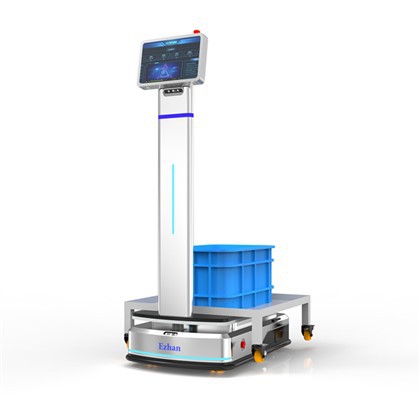
First off, it’s important to understand that the speed of a forklift robot isn’t a one – size – fits – all kind of deal. There are several things that play a role in determining how quickly it can zip around a warehouse or a distribution center.
One of the major factors is the type of environment the robot will be operating in. In a wide – open, obstacle – free warehouse, a forklift robot can really pick up the pace. These machines are designed to handle high – speed movements when there’s plenty of space. For example, in a large automotive parts distribution center where the aisles are wide and there aren’t many tight corners, a well – tuned forklift robot can reach speeds of up to 5 miles per hour (about 8 kilometers per hour). That’s pretty zippy for a machine that’s hauling heavy loads!
But if you throw in some obstacles, like narrow aisles or lots of other equipment and workers moving around, the speed has to be dialed back. Safety is the number one priority here. In a crowded e – commerce fulfillment center with narrow storage racks, the robot might only move at around 2 – 3 miles per hour (3 – 5 kilometers per hour). This slower speed allows the robot to navigate safely, avoid collisions, and make precise maneuvers.
The load capacity also has a big impact on speed. A forklift robot carrying a light load can move faster than one that’s fully loaded. When a robot is carrying a heavy pallet of goods, it has more mass to accelerate, decelerate, and control. So, if you’ve got a forklift robot designed to carry a maximum load of 5,000 pounds (about 2,268 kilograms), it’s not going to move as quickly when it’s at full capacity compared to when it’s carrying just a few hundred pounds.
Another thing to consider is the technology and design of the forklift robot itself. Newer models with advanced motor systems and better control algorithms can generally achieve higher speeds. These robots are equipped with state – of – the – art sensors and software that allow them to make quick decisions about speed adjustments based on the environment. For instance, some of the latest forklift robots we supply use LiDAR (Light Detection and Ranging) sensors to detect obstacles in real – time and adjust their speed accordingly.
Let’s talk about the different types of forklift robots and their typical speed ranges. There are counterbalance forklift robots, reach forklift robots, and pallet jack robots, each with its own speed characteristics.
Counterbalance forklift robots are often used for handling heavier loads and are more stable. They usually have a top speed in the range of 3 – 4 miles per hour (5 – 6.5 kilometers per hour). This speed is a good balance between moving efficiently and maintaining stability, especially when carrying large and heavy items.
Reach forklift robots are designed to reach high storage racks. They tend to be a bit slower, with speeds typically ranging from 2 – 3 miles per hour (3 – 5 kilometers per hour). This slower speed is necessary because they need to make precise movements when reaching up to high shelves to pick or place pallets.
Pallet jack robots, which are mainly used for moving pallets over short distances, can be the fastest of the bunch. In an open area, they can reach speeds of up to 5 miles per hour (8 kilometers per hour), making them great for quickly transporting pallets around a loading dock or a small warehouse.
Now, let’s think about the benefits of having a fast – moving forklift robot. Faster movement means increased productivity. A robot that can move quickly between storage locations and loading areas can complete more tasks in a shorter amount of time. This directly translates to cost savings for your business. You can handle more orders, reduce the time it takes to fulfill them, and improve overall efficiency.
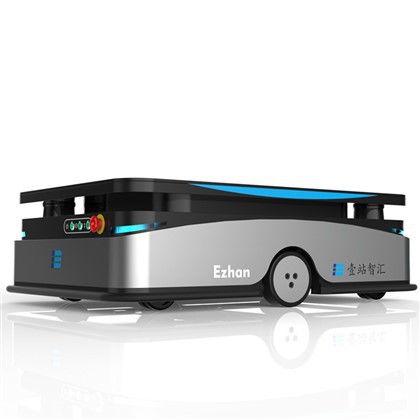
But it’s not all about speed. You also need to make sure the robot can operate safely and accurately. Our forklift robots are designed with a range of safety features, such as collision avoidance systems, emergency stop buttons, and warning lights. These features ensure that even at high speeds, the robot can operate without putting workers or other equipment at risk.
We also offer customization options to meet your specific speed requirements. If you have a unique warehouse layout or a particular set of tasks that require a certain speed, we can work with you to adjust the settings of the forklift robot. Maybe you need a robot to move a bit faster in a certain area of your warehouse, or you want to limit its speed in a more congested section. We can make it happen.
In conclusion, the speed of a forklift robot can vary widely depending on the environment, load capacity, and the type of robot. But with the right technology and design, we can provide a forklift robot that meets your speed and productivity needs while ensuring safety.
If you’re interested in learning more about our forklift robots and how their speed can benefit your business, or if you want to discuss a purchase, don’t hesitate to reach out. We’re here to answer any questions you might have and help you find the perfect forklift robot solution for your operation.
Robot Accessories References:
- Industry reports on warehouse automation and forklift robot technology
- Technical specifications of various forklift robot models
- Case studies of successful forklift robot implementations in different industries
Shenzhen Ezhan Technology Co., Ltd.
We’re known as one of the most reliable forklift robot manufacturers and suppliers in China. With abundant experience, we warmly welcome you to buy bulk customized forklift robot from our factory. If you have any enquiry about cooperation, please feel free to email us.
Address: Room 1808, 1809, 1810, Building 2, Aipark, Baolong 4th Road, Longgang District, Shenzhen City
E-mail: sales01@ezhankeji.com
WebSite: https://www.ezhanrobot.com/
