Hey everyone, Single Phase Pole Mounted Transformer
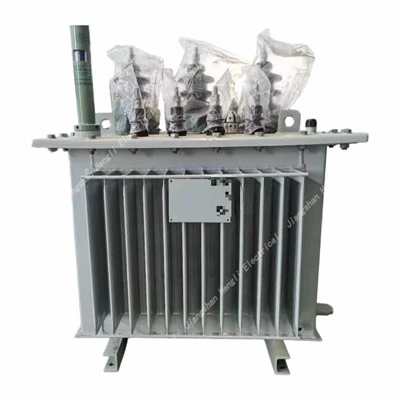
If you’ve ever driven down a residential street and glanced at those grey, boxy transformers mounted on wooden poles, you’ve probably wondered, “What’s the deal with that thing?” As a single phase pole mounted transformer supplier, I get this question all the time—whether it’s from a homeowner upgrading their backyard workshop, an electrician picking the right unit for a new development, or a small business owner troubleshooting a power issue. Today, I’m breaking down the voltage ratings of these workhorse transformers, keeping it real (no boring jargon, I promise) and explaining why it actually matters for your project.
First, let’s cut through the confusion. A single phase pole mounted transformer isn’t the same as the big, three-phase units you see at industrial sites. These ones are made for homes, small shops, and neighborhood areas where power needs are moderate—no heavy machinery or factory equipment here. Their voltage rating is basically the numbers that tell you how much power they can safely handle (input) and how much they deliver to end users (output). But why does that number vary so much? It’s not random; it’s tied to what the local power grid is set up for, and that’s where things get specific.
Let’s start with the input side, because that’s where the transformer connects to the grid. In North America, most residential power grids run on what’s called “distribution voltage”—that’s the high-voltage power that comes from the power plant and travels down lines to your neighborhood. For single phase pole mounted transformers, the standard input (primary) voltage here is usually either 12,470 volts (V) or 7,200 V. Wait, why two numbers? It has to do with how the grid’s lines are set up. Some areas use a three-phase system where each phase is 12,470 V, but we tap a single phase for homes, so the input ends up being 7,200 V between the phase line and the neutral line. Other places have a split-phase primary, so 12,470 V is common. Either way, these are the numbers that feed power into the transformer, and if you pick a unit with the wrong input rating, it’s gonna fry fast—no exaggeration, I’ve seen it happen. Electricians know their local grid’s primary voltage, but if you’re a homeowner new to this, you can check the utility’s website or give them a quick call to confirm. That’s a good first step.
Now the output side—this is the part that matters for your devices. The secondary voltage is what comes out of the transformer’s wires and goes into your home’s electrical panel. For single phase pole mounted transformers used in residential areas, the most common output (secondary) rating is 120/240 V. Let me translate that: that’s the standard voltage you use for everything from your phone charger (120 V) to your dryer or oven (240 V). Why two numbers? The transformer has a center tap on its secondary winding, so you get two 120 V legs, and together they make 240 V for high-power appliances. But wait—there are other secondary ratings too, depending on the application. If you’re powering a small commercial space, like a corner store or a café, you might need a 208 V single phase output. That’s common for places with larger refrigeration units or POS systems. Or if you’re in a rural area with unique power needs, sometimes you’ll see 120/240 V is still king, but a few older grids use 240 V only for specific setups. As a supplier, we regularly stock both 120/240 V and 208 V single phase units because that’s what our customers (electricians, contractors, small business owners) ask for most.
But here’s a key point most people miss: voltage rating isn’t just a number on a sticker. It’s paired with kVA (kilovolt-amperage) rating, which is the transformer’s capacity. A transformer with a 120/240 V output and 10 kVA rating can handle up to 10,000 watts of power, which is enough for a small home or a handful of tools. If you try to hook up a 5,000 watt workshop to a 5 kVA transformer, it’ll overheat and fail. That’s why matching the voltage rating to the kVA is so important. I had a customer last month who tried to save money by buying a smaller unit than he needed for his woodworking shop. He called me two weeks later, frustrated, because his transformer was tripping every time he ran his table saw. We ended up swapping him for a 15 kVA unit with the same 120/240 V rating, and he hasn’t had an issue since. That’s the kind of real-world stuff you don’t learn from a textbook—you learn from listening to what our customers actually deal with.
Now, let’s talk about regional differences, because this isn’t just a North American thing. If you’re outside the US or Canada, the voltage ratings are different. In most of Europe, Asia, and parts of Africa, the primary voltage for single phase pole mounted transformers is around 230 V or 400 V (wait, 400 V is three-phase, but single phase taps are 230 V). The secondary is usually 230 V for homes, though some countries like Japan use 100 V or 200 V. That’s why as a global supplier, we make sure we have units tailored to different regions—we don’t just ship the same stuff everywhere. A customer in Germany needs a different rating than one in Mexico, and we make that happen.
Another common question: can a single phase pole mounted transformer have a different voltage rating than standard? Sure, if you have a custom project. For example, if you’re adding a new outbuilding to your property that needs 240 V for a well pump, and your existing transformer is already maxed out, you might need a secondary tap that’s a bit higher or lower. That’s where working with a reputable supplier (hi, that’s us) comes in—we can help you spec out a custom unit that fits your exact needs, no guesswork. We don’t just sell transformers; we help our customers avoid costly mistakes.
Wait, let’s clear up a myth I hear all the time: “The voltage rating is the only thing that matters.” Nope, not even close. You also have to consider the transformer’s insulation class, its weatherproof rating (since it’s mounted outside on a pole), and whether it’s designed for overhead or underground use. But the voltage rating is the starting point—get that wrong, and the rest doesn’t matter. That’s why I always tell new customers: first, confirm your grid’s primary voltage, figure out the total power you need (add up all your appliances’ wattage to get kVA), and then pick a transformer with a secondary voltage that matches your electrical panel.
Let me circle back to why I’m so passionate about this. I’ve been a single phase pole mounted transformer supplier for 12 years now, and I’ve seen firsthand how a wrong voltage rating can cause headaches—tripped breakers, burnt out appliances, even safety hazards. On the flip side, getting it right makes a world of difference. A good transformer with the correct voltage rating will run for 20+ years with minimal maintenance, powering your home or business without a hitch. That’s the goal, right? Reliable power without the hassle.
If you’re not sure what voltage rating you need, don’t stress. We’re here to help. All you have to do is tell us a bit about your project: are you powering a home, a small shop, or a remote outbuilding? What’s your local grid’s voltage? We can walk you through the options, explain the difference between primary and secondary ratings, and make sure you get the right unit for the job. No sales pitches, no confusing tech talk—just straight answers, because that’s how we do business.
Whether you’re a contractor lining up materials for a new neighborhood development, a homeowner upgrading your electrical system, or a small business owner looking to expand, knowing the voltage rating of your single phase pole mounted transformer is non-negotiable. It’s the foundation of your power setup, so take the time to get it right. And if you need help, we’re just a message away.
Ready to talk through your transformer needs? Reach out to us today to discuss your requirements and find the perfect unit for your project.
Single Phase Pole Mounted Transformer References
- ANSI/IEEE Standard C57.12.00, “General Requirements for Liquid-Immersed Distribution, Power, and Regulating Transformers”
- NEMA Standard TR-1, “Distribution Transformers”
- U.S. Department of Energy, “Residential Electrical Distribution Systems: Voltage Ratings and Applications”
- International Electrotechnical Commission (IEC) Standard 60076-1, “Power Transformers – Part 1: General”
Zhejiang Jiangshan Hengli Electrical Co., Ltd.
Zhejiang Jiangshan Hengli Electrical Co., Ltd. is one of the most professional single phase pole mounted transformer manufacturers and suppliers in China, featured by quality products and low price. Please rest assured to wholesale cheap single phase pole mounted transformer in stock here and get pricelist from our factory. Customized orders are welcome.
Address: 212 Fuzhu Street Sidu Town, Jiangshan, Zhejiang, China
E-mail: henglijs@foxmail.com
WebSite: https://www.henlypower.com/
