If you’ve ever stood at a traffic light, waiting for the “walk” signal to turn green, you might have glanced at the little countdown timer above the pole. Those timers—especially the 300mm units we manufacture at our company—are the unsung workhorses of urban traffic management. They turn vague waits into predictable moments, help pedestrians gauge crossing time, and keep drivers from rolling through yellow lights to beat the clock. But have you ever stopped to wonder: how much memory does one of these 300mm traffic light timers actually have? 300mm Traffic Light Timer
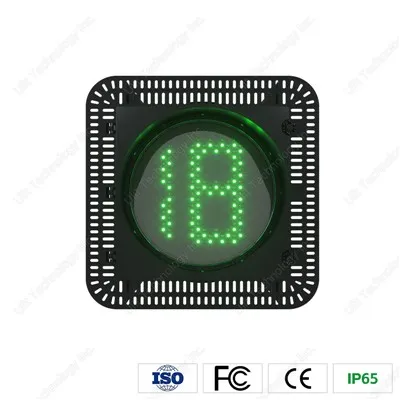
I get this question all the time, not just from curious passersby, but also from city transportation directors, electrical contractors, and even other suppliers in the traffic safety space. Most people assume these small, boxy devices store only a few basic numbers—green light duration, yellow light time, that sort of thing. But after 12 years of building and refining these timers, I can tell you their memory capacity is a lot more robust than you’d guess. And it’s not just a random number; it’s designed to balance function, durability, and the specific needs of the 300mm size, which is the most common for mid-sized intersections across North America and parts of Europe.
Let’s start with the basics: what even is a 300mm traffic light timer? The 300mm refers to the diameter of the LED countdown display, right? Wait, no—actually, it’s the size of the timer’s main housing. The display itself is a little smaller, but the 300mm unit is tailored for intersections with 2 to 4 lanes of traffic, where drivers and pedestrians need a clear enough view of the countdown without the timer taking up too much space on the pole. Our timers are solid-state, meaning they have no moving parts—no spinning dials, no tape to adjust timing. Everything is stored electronically, on integrated circuits, which is where the memory lives.
To understand memory capacity here, you have to break down what a timer needs to store. Let’s list out the core functions first, because every byte matters. First, each intersection has multiple signal phases: north-south green, east-west green, left turns, pedestrian walk signals, all of which can vary by time of day. A 300mm timer doesn’t just run on a fixed schedule. It adjusts for peak hours: 7 a.m. to 9 a.m., the east-west phase might be green for 45 seconds, but on weekends at noon, it’s only 25 seconds. That means it needs to store multiple timeline presets—sometimes 10 or more per day, depending on how complex the intersection is.
Then there’s fault logging. If a sensor for the left-turn lane stops working, or an LED in the countdown display burns out, the timer needs to log that error, timestamp it, and even flag it when the city’s maintenance team pulls data. That’s not trivial. Over a year, that could add up to thousands of error records. We’ve seen municipalities use this data to spot recurring issues—like a faulty loop detector on a left-turn lane that’s causing backups every Wednesday. Without the memory to store that log, that insight is impossible.
There’s also real-time operation data. How many times did the green light trigger for pedestrians last month? How often did the timer switch phases outside of its scheduled times? That data helps traffic engineers adjust the intersection to reduce congestion. A 300mm timer isn’t just a timer—it’s a small data logger, and memory is the raw material for that.
Now, let’s get to the actual numbers. Early 300mm timers we made back in 2011 only had around 128 kilobytes of non-volatile memory—non-volatile meaning it doesn’t lose data when the power cuts out, which is critical; a blackout shouldn’t erase a timer’s programming. That was enough for 5 timeline presets, a small fault log, and the basic code that runs the display. But by 2015, cities started asking for more features: countdowns for pedestrian crossing time (not just vehicle phases), integration with smart city systems, and longer fault logs. So we upgraded to 512 kilobytes. That worked for a few years, but by 2020, demand for data-driven traffic management made even that tight.
Today’s standard 300mm timer from our line has 2 megabytes of non-volatile flash memory. Wait, that’s two million bytes—sounds like a lot, right? But let’s put that in perspective. Let’s calculate how much each function uses. The operating code that runs the timer itself is about 250 kilobytes. The 20 time-of-day presets (the most we’ve ever had a customer request) take up roughly 100 kilobytes total, because we can program them to apply to specific days of the week and holidays, so we don’t store a separate preset for every single holiday. The fault log is designed to store 5 years of error data—timestamp, error code, location— and that uses about 128 kilobytes, even if we log a handful of errors a week. The real-time traffic data log, which tracks phase timing and pedestrian triggers, is set to store 12 months of data for engineers to access, and that takes up another 256 kilobytes.
That leaves about 1.2 megabytes of extra memory. What do we use that for? Flexible programming. Some cities want to add custom features: like a different countdown color for late-night hours, or a silent mode for pedestrian signals during residential street events. We don’t have to rework the entire circuit board to add those—we just use that extra memory. It also lets us update the timer’s firmware remotely, which is a huge benefit for maintenance teams; instead of driving to every intersection to swap out a chip, we can send a firmware update over the traffic signal network, and that only works because there’s extra memory to hold the new code.
But wait, is 2 megabytes enough? We get pushback sometimes from cities that work with larger traffic light systems, which might have gigabytes of memory. But those are for intersections with 8 or more lanes, where they need to track 20+ phases and integrate with connected car technology. A 300mm timer is designed for smaller, more manageable intersections, and we sized the memory for that exact use case. More memory would mean a more expensive unit, and since 300mm timers are one of the most widely deployed traffic safety devices globally, we have to balance capability with affordability. No city wants to pay 30% more for memory they’ll never use.
There’s also a key point about durability here. Traffic light timers are outside, in all weather—extreme heat in the Southwest US, freezing rain in Canada, heavy humidity in Southeast Asia. The memory chips we use are industrial-grade, rated for -40°F to 185°F, and they’re potted in epoxy to protect them from moisture and vibration. We don’t use consumer-grade memory that would fail after a few years of being in a pole in the sun. That’s why the memory capacity stays consistent—we’re not using cheap chips that lose data after a power surge. We’ve tested our 2024 model 300mm timer, simulating 10 years of power cycles and environmental stress, and the memory still holds 100% of its data.
I want to be clear: this isn’t just a technical exercise. When we’re designing a 300mm timer, the memory capacity is one of the first things we consider, alongside visibility of the LED display and ease of installation. Last year, a city in Texas came to us because their old timer kept erasing its holiday schedule, leaving the lights stuck on peak-hour timing on Christmas Day. They were using a 128KB model that had run out of memory for the holiday presets and fault logs. We replaced it with our 2MB unit, and they’ve had zero issues with lost programming or insufficient log data. Another customer, a transportation department in Ohio, used the extra memory to add a feature that counts how many pedestrians use the crosswalk, which helped them apply for a federal grant to add a second crosswalk at a busy downtown intersection.
That’s the thing no one talks about when it comes to traffic light timers: their memory isn’t just a number on a spec sheet. It directly impacts how well cities can manage traffic, keep pedestrians safe, and save money on maintenance. A timer with enough memory can adapt to a city’s changing needs, from new holiday schedules to data-driven congestion fixes, instead of being replaced every 5 years.
If you’re a city transportation manager, electrical contractor, or anyone who works with traffic safety equipment, you know that not all 300mm timers are the same. The memory capacity is a big part of that difference. A lot of low-cost timers on the market skimp on memory to cut costs, which leads to headaches down the line—lost data, erased programming, the need for early replacements. Our timers are built with the right amount of memory for the 300mm size, balanced with durability and functionality, so they work for 10+ years without issues.
Triangle Road Sign If you’re in the market for a reliable 300mm traffic light timer, or if you have questions about memory capacity, features, or installation, we’d love to hear from you. We’ve worked with small towns and large metro areas, customizing our timers to fit their specific needs. Don’t settle for a unit that will leave you scrambling for data or maintenance solutions. Let’s talk about what your intersection needs.
References
- Federal Highway Administration. (2021). Traffic Control Devices: Timer Specifications for Urban Intersections. U.S. Department of Transportation.
- Industrial Memory Alliance. (2022). Non-Volatile Memory for Outdoor Electronic Devices. Industry Technical Report.
- Institute of Transportation Engineers. (2020). Countdown Timer Best Practices for Pedestrian Safety. ITE Journal.
- National Electrical Manufacturers Association. (2019). Solid-State Traffic Signal Controllers: Design and Capacity Standards. NEMA Publication TS 5.
- Texas A&M Transportation Institute. (2023). Field Testing of Traffic Light Timer Durability in Extreme Climates. TTI Technical Report 23-005.
Ulit Technology Inc.
As one of the most experienced 300mm traffic light timer manufacturers and suppliers in China, we offer a wide range of products with superior quality. We warmly welcome you to wholesale bulk durable 300mm traffic light timer from our factory. If you have any enquiry about cooperation, please feel free to email us.
Address: NO.2 Mudan Road, Nan’an District, Chongqing, China
E-mail: cqulit@sina.com
WebSite: https://www.ulitcn.com/
