If you’ve ever walked a construction site, watched a crew lay a new road, or stood on the edge of a housing development waiting for concrete to settle, you’ve probably seen a road roller at work. These machines are the unsung heroes of infrastructure—they turn loose gravel, asphalt, or soil into a solid, level foundation that will last for decades. But if you’re in the market for one, whether for a new project or replacing an aging unit, you’ve likely wondered: is a new road roller worth the investment, or is a used model a better fit? As someone who’s supplied road rollers for 12 years now—working with small contractors building residential subdivisions and large firms on state highway projects—I’ve heard this question a thousand times. Let’s break down the real differences between new and used road rollers, not just the specs on paper, but the practical stuff that matters to you when you’re working on a tight deadline and a tight budget. Road Roller
First, let’s start with the basics: what a road roller does. At its core, it’s a heavy machine that compacts material by applying static weight (via a smooth steel drum), vibration, or both, to eliminate air pockets and create a dense, stable surface. There are different types—smooth drum rollers for asphalt, padfoot rollers for soil compaction, pneumatic tire rollers for base layers—but the core function is the same. When you compare a new vs. used unit, the first big gap is in compliance and emissions standards. This is not just a red tape thing; it’s a legal and operational reality. In most parts of North America, Europe, and even many growing markets, engines have to meet Tier 4 Final (or equivalent) emissions standards. These standards cut down on particulate matter and nitrogen oxide, making the machine cleaner to operate, which is a big win for workers on site and local air quality. Used road rollers built before about 2015 almost never meet these standards. If you’re working in a region with strict emissions rules, using a pre-2015 used roller can get you fined, or even stop your project entirely mid-job. I had a contractor out in Texas a few years back who bought a used padfoot roller for a $2 million subdivision project, only to find out the county had just updated its local emissions rules. He had to rent a temporary roller for two weeks while he sourced a compliant one, costing him $15,000. That’s not a small mistake. New rollers come straight from the factory with the latest emissions tech, so you never have to worry about that.
Next, performance. New road rollers are designed with the latest engineering, so their compaction accuracy is better. You can program them with GPS to measure compaction in real time, so you know exactly when an area is dense enough, no guesswork. That’s a huge time-saver—you don’t have to go back and re-compact areas because you missed a spot, or waste time testing with a nuclear density gauge. Used rollers, even well-maintained ones, don’t have that tech. Their vibration systems wear out over time; the drums can develop uneven wear, which means you have to go over areas multiple times just to get a level surface. I’ve seen a 10-year-old smooth roller that had a drum worn unevenly in the center, so the asphalt coming out had a slight crown in the middle, leading to puddling a year later. New rollers have precision-machined drums that wear evenly for thousands of hours. Also, fuel efficiency: new engines are 20-30% more fuel-efficient than older used models. That’s money in your pocket over time. A contractor I work with in Arizona does 5,000 hours a year on his rollers. He upgraded to a new model two years ago and saves about $1,200 a month on fuel, which adds up to more than $14,000 a year. That’s a big difference when you’re working on thin margins.
Warranty and reliability are two other huge points. When you buy a new road roller, you get a full manufacturer’s warranty, usually 2-3 years or 2,000-3,000 hours, whichever comes first. That covers parts and labor for any defects, so if something breaks—say, a hydraulic line leaks, or the vibration motor fails—you don’t pay a dime. Used rollers almost always have some remaining warranty, but it’s usually only 30-90 days, and often doesn’t cover wear and tear or major components. I once had a customer who bought a used roller that was listed as “low hours, well-maintained.” Three weeks into a project, the transmission failed, which cost him $8,000 in parts and labor. The seller refused to cover it because it was “used equipment.” New rollers also have a track record of parts availability. For the major brands we supply, parts are in stock at dealers across the country within 24 hours. Used rollers, especially older models, can have parts that take weeks to source, or that are no longer made. I had a customer in Florida who had a 1998 padfoot roller; he had to order a new drum from a supplier in Germany, which took six weeks, and his project was delayed that entire time. New rollers don’t have that problem. You also have the peace of mind that the machine hasn’t been abused. Used rollers can come from rental fleets where operators run them 12 hours a day, skip scheduled maintenance, and ignore small issues until they become big problems. When a machine is listed as “well-maintained,” that’s sometimes hard to verify. A new roller’s maintenance schedule is built into the machine’s computer, so you get alerts when it’s time for an oil change, filter replacement, or service. That means fewer breakdowns on site.
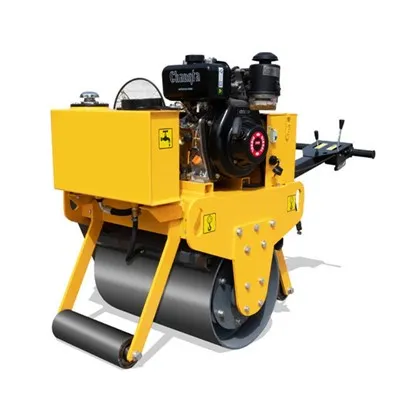
Of course, used rollers have their benefits, and they’re the right choice for some situations. The biggest one is price. A used roller that’s 5 years old with 3,000 hours can cost 40-60% less than a new model of the same size. For a small contractor doing a single residential driveway or a small sidewalk project, that lower upfront cost can be a make-or-break. You also don’t have to deal with depreciation, which is a big hit for new equipment. A new road roller loses 20-30% of its value the minute you drive it off the lot. If you buy used, that depreciation has already happened, so you’re not taking that hit. There’s also the availability of used models for very specialized jobs. Some small, niche roller types are no longer made, so you can only get them used. For example, there are small, walk-behind padfoot rollers that are perfect for tight spaces like utility line trenches, and some of those are only available used. Also, if you’re only going to use the roller for a few days a year, renting or buying a used one might make more sense. But I always caution customers: if you’re going to use it regularly, more than 500 hours a year, the higher upfront cost of a new roller pays off in the long run.
Let’s talk about long-term total cost of ownership, because that’s what most people miss. It’s not just the price tag when you buy; it’s what you spend over the life of the machine. Take fuel costs, as I mentioned earlier. For a 5-year-old 10-ton smooth roller, fuel costs are about $15 an hour, while a new model is $11 an hour. Over 5,000 hours a year, that’s a $20,000 difference. Then there’s maintenance. Used rollers need more frequent repairs; parts are more expensive, and labor for repairs is higher if you have to source specialty parts. New rollers come with free maintenance for the first year or 1,000 hours, so you don’t spend anything on oil changes, filters, or minor service during that time. Then there’s downtime. A breakdown on site can cost you thousands of dollars in delayed work, late fees, and missed deadlines. I had a customer on a road project in Oregon a few years back whose used roller broke down the day before a critical paving run. The repair took 12 hours, and he had to pay his crew overtime and a penalty to the state for finishing late. The total cost was $18,000, which was more than the extra he would have paid for a new roller up front.
Another difference is financing and resale value. Banks are more willing to finance new road rollers because they’re backed by the manufacturer, and their value is more predictable. For used rollers, interest rates are usually higher, and it’s harder to get a loan for more than 5 years. When you go to resell, a new roller will hold its value better. A well-maintained new roller at 5 years old and 3,000 hours will sell for 70% of its original price, while a used roller of the same age and hours will sell for 50% of its original price. That means when you’re ready to upgrade, you get more money back for a new unit.
Now, let’s get real about common myths. Some people think used rollers are just as good as new if they’re well-maintained. But maintenance can only do so much. Steel drums wear over time; even if you replace the bearings and do oil changes, the drum’s surface will have tiny, uneven dents or wear patterns that affect compaction. The engine’s components have more wear, so it works harder and uses more fuel, even if it runs fine. There’s also the matter of safety. New road rollers come with the latest safety features: backup cameras, audible alarms, rollover protection systems, and ergonomic seats that reduce operator fatigue. Older used rollers often don’t have these features, which can lead to accidents on site. The Occupational Safety and Health Administration (OSHA) reports that heavy equipment accidents are a leading cause of construction worker injuries, and features like backup cameras and rollover protection can reduce those accidents by 30%. That’s not just a safety benefit; it’s a way to avoid workers’ comp claims and downtime.
So, who should choose a new road roller? If you’re a contractor working on large, long-term projects, need to meet emissions standards, want reliable performance, and can afford the higher upfront cost, new is the way to go. It’s better for your schedule, your crew, and your bottom line in the long run. Who should choose a used one? If you’re a small contractor doing occasional, small jobs, need a very specialized machine that’s no longer made, or have a very tight budget and only need the roller for a short time, a used roller can work, as long as you inspect it thoroughly, check its maintenance records, and make sure it meets local regulations.
At the end of the day, the decision comes down to your project needs, budget, and long-term goals. I’ve seen customers go both ways: a small general contractor in Georgia who buys a used walk-behind roller for $8,000 to do small jobs, and a large highway firm in California that relies entirely on new rollers to meet state regulations and stay on schedule. There’s no one-size-fits-all answer, but it’s important to look beyond the sticker price and think about what you’ll pay over time.
If you’re not sure which is right for you, or if you’d like to learn more about the road rollers we supply, our team can help you evaluate your project needs, compare specs, and walk you through all the factors. We work with contractors of all sizes, from solo operators to large national firms, and we can help you find the right fit whether you’re looking for a new or used road roller. We also offer flexible financing options, maintenance packages, and support for all our equipment, so you can focus on getting the job done, not worrying about your machine. If you have questions or want to discuss your specific project, please reach out to our sales team to arrange a conversation. We’re here to help you make the best choice for your business.
Off-road Forklift References
- Occupational Safety and Health Administration (OSHA). (2022). Heavy Equipment Safety Standards for Construction Sites. U.S. Department of Labor.
- American Society of Civil Engineers (ASCE). (2021). Compaction Technology for Modern Infrastructure Projects. ASCE Press.
- U.S. Environmental Protection Agency (EPA). (2015). Final Rule for Heavy-Duty Engine Emissions Standards. U.S. EPA.
- Construction Equipment Association (CEA). (2023). Total Cost of Ownership for Heavy Construction Equipment. CEA Publications.
Jining Sunsail Machinery Co., Ltd.
With abundant experience, we are one of the most professional road roller manufacturers and suppliers in China. We warmly welcome you to buy high-grade road roller made in China here from our factory. For price consultation, contact us.
Address: Room 410, Digital Industry Building, Rencheng District, Jining City, Shandong Province,China
E-mail: Sunsail_machinery@163.com
WebSite: https://www.sunsailmachine.com/
