If you’ve ever stood on a factory floor watching a lathe carve a precision part from a metal bar, or held a fully machined component that fits together like it was made just for the part next to it, you’ve seen machinability at work. As someone who’s spent the last 12 years supplying alloy steel bars to machine shops, automotive part manufacturers, and aerospace fabricators, I can tell you that machinability is one of the most misunderstood—and most critical—factors in choosing the right bar for a job. It’s not just a buzzword; it’s the difference between a part that comes off the line smooth and on budget, and one that gums up tools, wastes material, and pushes your delivery date into next month. Alloy Steel Bar
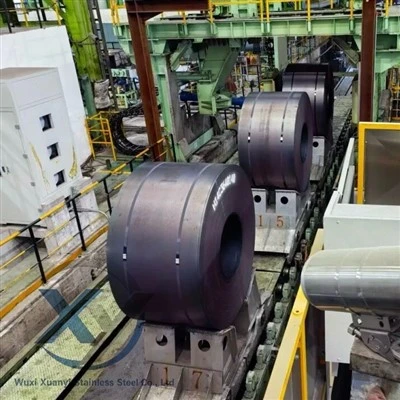
Let’s start with the basics: machinability is a measure of how easily a metal can be cut, shaped, and formed without causing damage to the tool, defects in the finished part, or unnecessary waste. For alloy steel bars specifically, this isn’t a one-size-fits-all trait. Alloys are made by adding elements like chromium, nickel, molybdenum, or vanadium to carbon steel to boost strength, toughness, corrosion resistance, or heat stability—and those very elements can make machining trickier. I’ve seen this firsthand: a few years back, a small aerospace shop came to us frustrated because their usual mild carbon steel bar was no longer meeting the stress requirements for a bracket they were making. They switched to a chrome-moly alloy, thinking it would be a simple upgrade, but within a week they were replacing their carbide inserts every two hours, and parts were cracking during machining. It turned out they’d picked an alloy with too high a chromium content for their existing cutting parameters. That experience taught me that machinability isn’t just about the bar itself—it’s the marriage of the bar’s composition, the tooling, and the operator’s process knowledge.
So what makes alloy steel bars more or less machinable? The biggest factor is their chemical composition, hands down. Low-alloy steels, which have less than 5% total alloying elements, are generally more machinable than high-alloy grades, but that’s not a hard rule. For example, 4140 alloy steel—one of the most common bars we supply—has 1% chromium and 0.2% molybdenum. It’s strong enough for crankshafts, gears, and structural parts, and while it’s harder than plain 1018 carbon steel, it machines smoothly if you use the right tool speed and feed. But high-alloy bars like 4340, which has higher nickel and chromium, or H13 tool steel, with vanadium, are much tougher. Their hardness and the uniform structure of their grains can cause cutting tools to wear faster, generate more heat, and leave a rougher surface finish. I remember a customer in the oil and gas industry trying to machine a 4340 bar down to a thin wall for a pressure vessel. They were running their lathe at the same speed they used for 4140, and the tool started chattering so bad the part was off by 0.005 inches. Once they slowed the speed and adjusted the feed rate, it worked like a charm—but that wasted first day of production could’ve been avoided if they’d checked the alloy’s machinability specs first.
Another key factor is the microstructure of the alloy steel bar when it arrives at the shop. Bars that are left in a “as-cast” or “as-rolled” state have uneven grain structures, residual stress, and sometimes hard carbides scattered throughout—all of which make machining harder. That’s why most of the alloy bars we supply are heat-treated, normalized, or annealed before delivery, and we always note their machined condition on the material test report (MTR) that comes with every shipment. For example, annealed 4140 has a softer, more uniform grain structure than its quenched-and-tempered counterpart, so it’s easier to machine for shops making simple parts. But if you need a part that will hold up under extreme pressure, you’ll want the quenched-and-tempered 4140, which is harder and stronger, and you’ll adjust your tooling accordingly. The trick is knowing which microstate fits your process: we’ve had shops ask for “as-rolled” bars to save a few dollars, only to call us a week later complaining about tool wear, so now we always walk them through the trade-offs.
Free-machining additives are another way we adjust the machinability of alloy steel bars, and this is a trick that makes a huge difference for high-volume production runs. Many alloy steels have small amounts of sulfur, lead, or tellurium added during manufacturing to make the chips break off easily instead of long, stringy, tangled messes that wrap around tools and parts. Let’s be honest: nothing stops a production line faster than a chip that’s wrapped around a drill bit, pulling it off center and ruining a dozen parts. For example, 4140 resulfurized is a grade we supply specifically for high-volume CNC machining. Adding sulfur creates tiny, soft sulfide inclusions that act as stress points, so when you cut the metal, the chips snap off cleanly. The downside is that these additives can slightly lower the overall strength and corrosion resistance of the bar, so we never recommend them for parts that need to meet strict industry standards. That’s part of being a good supplier: we don’t just sell you a bar—we tell you when a free-machining grade is the right call, and when you need to stick to a standard grade even if it costs a little extra in tooling.
Tooling choice and cutting parameters also play a huge role in how machinable an alloy steel bar feels. A few years ago, I worked with a shop that was machining H13 tool steel bars for die molds. They were using generic carbide tools, and they were burning through inserts every 50 pieces. We suggested switching to coated carbide inserts—specifically TiN or TiCN coatings, which are harder and more heat-resistant than uncoated carbide—and adjusted their cutting speed from 200 surface feet per minute (SFPM) to 120 SFPM. Suddenly, they were getting 200 pieces per insert, and the surface finish on the dies improved so much they didn’t need secondary polishing. That’s the thing about machinability: it’s not a fixed property of the bar. It’s a performance metric that depends on how you work with the bar. A tough high-alloy bar might seem un-machinable if you use the wrong tool, but with the right parameters, it can cut just as well as a softer low-alloy bar.
Of course, there are common mistakes people make when evaluating alloy steel bar machinability, and I’ve seen them all. The biggest is assuming that a harder bar is less machinable. That’s often true, but not always. For example, 1018 carbon steel is soft, but its uniform structure means it can produce stringy chips that are hard to control. A medium-alloy 4140 bar, when in the annealed state, is a little harder but has a more balanced structure, so it machines with much cleaner chips than soft carbon steel. Another mistake is ignoring residual stress in bars that have been cut from large billets or treated unevenly. I once had a customer machine a 6-foot 4340 bar in one pass, only for it to warp 0.2 inches by the time it was fully cut. The issue wasn’t the machinability of the bar—it was that the residual stress from rolling hadn’t been relieved, so machining released that stress and distorted the part. We now always suggest that shops stress-relieve large bars before machining, or machine them in smaller segments to avoid that issue.
For our team, supplying alloy steel bars means more than just delivering a piece of metal. It means helping our customers understand how that metal will perform in their specific process. We keep a detailed chart on hand that lists the machinability ratings of every grade we supply, compared to a standard of 100% for free-machining 12L14 carbon steel. So 4140 annealed is rated around 65%, 4140 resulfurized is 80%, and 4340 quenched-and-tempered is around 50%. Those numbers might seem abstract, but they translate directly to how many parts you can get per tool, how smooth your surface finish will be, and how much time you’ll spend adjusting your machine instead of producing parts. We also share that MTR I mentioned earlier—no hidden information, no fine print—so our customers know exactly what they’re working with when the bar arrives.
If you’re in the market for alloy steel bars, whether you’re a small job shop making custom parts or a large manufacturer mass-producing automotive components, machinability should be at the top of your list of factors to consider. It’s tempting to just go for the strongest or cheapest bar, but a bar that’s hard to machine will end up costing you more in tooling, wasted material, and downtime. That’s why we take the time to talk through your project with you: what’s the part’s purpose? What machine are you using? What’s your production volume? Once we have those details, we can point you to the alloy bar that balances strength, durability, and machinability to fit your needs.
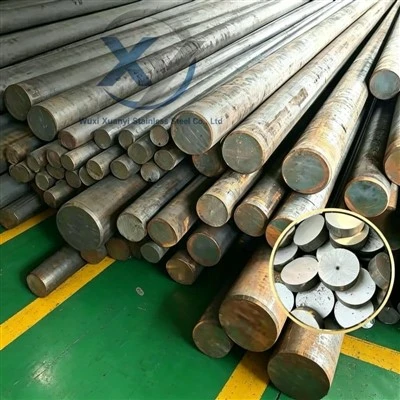
At the end of the day, I’ve been in this industry long enough to know that a great part starts with a great material. The machinability of your alloy steel bar isn’t just a technical spec—it’s the backbone of your production process. It’s what lets you hit your deadlines, keep your costs on track, and deliver a part your customers can rely on. If you’re working on a project and you’re not sure which alloy bar will give you the machinability you need, or if you’ve been dealing with tool wear, bad chip control, or parts that just aren’t turning out right, reach out to our team. We’ve helped hundreds of shops solve machinability issues, and we’d be happy to help you too.
Stainless Steel Welded Pipes and Tubes References
- Kalpakjian, S., & Schmid, S. R. (2019). Manufacturing Processes for Engineering Materials (7th ed.). Pearson.
- Astakhov, V. P. (2006). Machinability of Steels: Theory and Applications. CRC Press.
- American Iron and Steel Institute. (2021). Alloy Steel Bar Standards and Machinability Guidelines. AISI.
- Shaw, M. C. (2005). Metal Cutting Principles (2nd ed.). Oxford University Press.
Wuxi Xuanyi Stainless Steel Co., Ltd.
Wuxi Xuanyi Stainless Steel Co., Ltd. is one of the most professional alloy steel bar manufacturers and suppliers in China. With abundant experience, we warmly welcome you to wholesale bulk durable alloy steel bar made in China here from our factory. If you have any enquiry about cooperation, please feel free to email us.
Address: Room 1207, Building 11, Shengang Metropolis Plaza, No. 299 Fangcheng Avenue, Xinwu District, Wuxi City,China.
E-mail: jscherryxy@163.com
WebSite: https://www.xuanyisteel.com/
