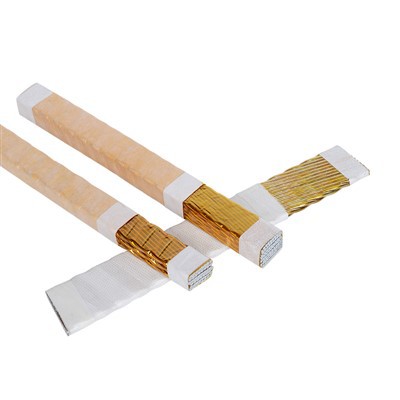
As a seasoned supplier of Flat Litz Wire, I’m often asked about the impedance of this remarkable product. Impedance is a critical electrical property that affects the performance of Flat Litz Wire in various applications. In this blog post, I’ll delve into the concept of impedance, how it relates to Flat Litz Wire, and its implications for different industries. Flat Litz Wire
Understanding Impedance
To grasp the impedance of Flat Litz Wire, we first need to understand what impedance is. In electrical engineering, impedance (Z) is a measure of the opposition that a circuit presents to the flow of an alternating current (AC). It combines two components: resistance (R) and reactance (X). Resistance is the opposition to the flow of direct current (DC) and is caused by the material’s inherent properties, such as the resistivity of copper in the case of Litz Wire. Reactance, on the other hand, is the opposition to the flow of AC due to inductance (L) and capacitance (C) in the circuit.
Mathematically, impedance is represented as a complex number: Z = R + jX, where j is the imaginary unit (√-1). The magnitude of impedance, |Z|, is calculated using the Pythagorean theorem: |Z| = √(R² + X²). The phase angle φ between the voltage and current in the circuit is given by φ = arctan(X/R).
Factors Affecting the Impedance of Flat Litz Wire
The impedance of Flat Litz Wire is influenced by several factors, including:
Frequency
One of the most significant factors affecting impedance is frequency. At low frequencies, the impedance of Flat Litz Wire is primarily determined by its resistance. However, as the frequency increases, the reactance component becomes more significant. Inductive reactance (XL) increases with frequency (XL = 2πfL), while capacitive reactance (XC) decreases with frequency (XC = 1/(2πfC)).
In high-frequency applications, the skin effect and the proximity effect become more pronounced. The skin effect causes the current to concentrate near the surface of the conductor, increasing the effective resistance. The proximity effect occurs when multiple conductors are placed close to each other, causing the current distribution to be non-uniform. Flat Litz Wire is designed to mitigate these effects by using multiple insulated strands woven together. This configuration reduces the skin effect and the proximity effect, resulting in a lower impedance at high frequencies.
Strand Configuration
The number, size, and arrangement of the strands in Flat Litz Wire also affect its impedance. A larger number of smaller strands generally results in a lower impedance at high frequencies. This is because the smaller strands have a larger surface area-to-volume ratio, which reduces the skin effect. The arrangement of the strands, such as the twist pitch and the weaving pattern, can also influence the impedance by affecting the magnetic coupling between the strands.
Insulation Material
The insulation material used in Flat Litz Wire can have a significant impact on its impedance. The dielectric constant of the insulation material affects the capacitance between the strands, which in turn affects the reactance component of the impedance. A lower dielectric constant insulation material can reduce the capacitance and, therefore, the impedance at high frequencies.
Temperature
Temperature can also affect the impedance of Flat Litz Wire. The resistance of the conductor material increases with temperature, following the temperature coefficient of resistance. This increase in resistance can lead to an increase in the impedance of the wire. In addition, the dielectric properties of the insulation material can also change with temperature, affecting the capacitance and the reactance.
Measuring the Impedance of Flat Litz Wire
Measuring the impedance of Flat Litz Wire requires specialized equipment, such as a network analyzer or an impedance analyzer. These instruments can measure the complex impedance of the wire over a wide range of frequencies. The measurement process typically involves connecting the wire to the analyzer and applying a known AC signal. The analyzer then measures the voltage and current at the input and output of the wire and calculates the impedance based on the measured values.
It’s important to note that the impedance of Flat Litz Wire can vary depending on the measurement setup, including the length of the wire, the termination impedance, and the environmental conditions. Therefore, it’s essential to follow a standardized measurement procedure to ensure accurate and reproducible results.
Applications of Flat Litz Wire Based on Impedance
The unique impedance characteristics of Flat Litz Wire make it suitable for a wide range of applications, including:
Power Electronics
In power electronics applications, such as inverters, converters, and power supplies, Flat Litz Wire is used to reduce the power losses due to high-frequency currents. The low impedance of Flat Litz Wire at high frequencies helps to improve the efficiency of the power conversion process and reduces the heat generated in the circuit.
Wireless Charging
Wireless charging systems rely on the efficient transfer of power between the transmitter and the receiver coils. Flat Litz Wire is commonly used in these coils due to its low impedance at the operating frequency, which helps to maximize the power transfer efficiency.
High-Frequency Transformers
High-frequency transformers are used in many applications, such as telecommunications, radar systems, and switch-mode power supplies. Flat Litz Wire is an ideal choice for the windings of these transformers because of its low impedance and improved performance at high frequencies.
Importance of Impedance Matching in Flat Litz Wire Applications
In many applications, it’s crucial to match the impedance of the Flat Litz Wire to the impedance of the source and the load. Impedance matching ensures maximum power transfer between the components and minimizes reflections, which can cause signal distortion and power losses.
For example, in a wireless charging system, the impedance of the transmitter coil should be matched to the impedance of the power source, and the impedance of the receiver coil should be matched to the impedance of the load (e.g., the battery). By using Flat Litz Wire with the appropriate impedance characteristics and carefully designing the circuit layout, it’s possible to achieve a high degree of impedance matching and improve the overall performance of the system.
Conclusion
In conclusion, the impedance of Flat Litz Wire is a complex electrical property that is influenced by several factors, including frequency, strand configuration, insulation material, and temperature. Understanding the impedance characteristics of Flat Litz Wire is essential for selecting the right wire for a specific application and ensuring optimal performance.
As a supplier of Flat Litz Wire, we offer a wide range of products with different impedance characteristics to meet the diverse needs of our customers. Whether you’re working on a power electronics project, a wireless charging system, or a high-frequency transformer, our team of experts can help you choose the right Flat Litz Wire for your application.
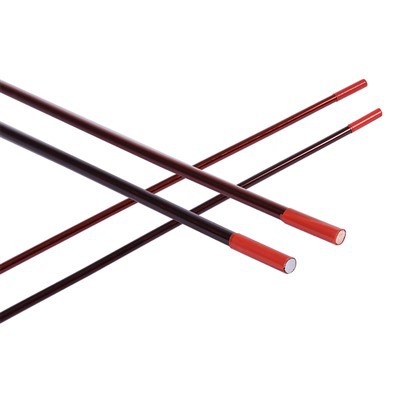
Enameled Round Wire If you’re interested in learning more about our Flat Litz Wire products or have any questions about impedance or other electrical properties, please don’t hesitate to contact us. We’re here to provide you with the best solutions and support for your projects.
References
- Grover, F. W. (1946). Inductance Calculations: Working Formulas and Tables. Dover Publications.
- Paul, C. R. (2007). Analysis of Multiconductor Transmission Lines (2nd ed.). John Wiley & Sons.
- Alexander, C. K., & Sadiku, M. N. O. (2017). Fundamentals of Electric Circuits (6th ed.). McGraw-Hill Education.
Tianjin Jingwei Power Technology Co., Ltd.
As one of the most professional flat litz wire manufacturers and suppliers in China, we’re featured by quality products and good service. Please rest assured to buy durable flat litz wire made in China here from our factory. Contact us for more details.
Address: No.1 Chuangxin Rd. Xiaozhan Industrial Park, Jinnan District, Tianjin, China
E-mail: info@jwdc.cn
WebSite: https://www.jw-dcs.com/
